The tally sheet problem no one talks about
Walk into most sawmills and you’ll find the same thing: a worker with a clipboard, tallying planks by hand. It’s a system that’s worked for generations — until production volume grows, shifts change, or a discrepancy surfaces that nobody can trace back. At that point, the tally sheet doesn’t just slow you down. It becomes a liability.
Manual plank counting is more error-prone than it looks. The gap between timber leaving the saw and appearing in a production report can stretch hours — sometimes longer. Decisions about yield, dispatch, and inventory get made on yesterday’s numbers. And when something doesn’t add up, there’s no image, no timestamp, no audit trail. Just conflicting recollections.
This is the operational reality that Timbeter Lumber was built to solve.
What AI-powered plank counting actually looks like in practice
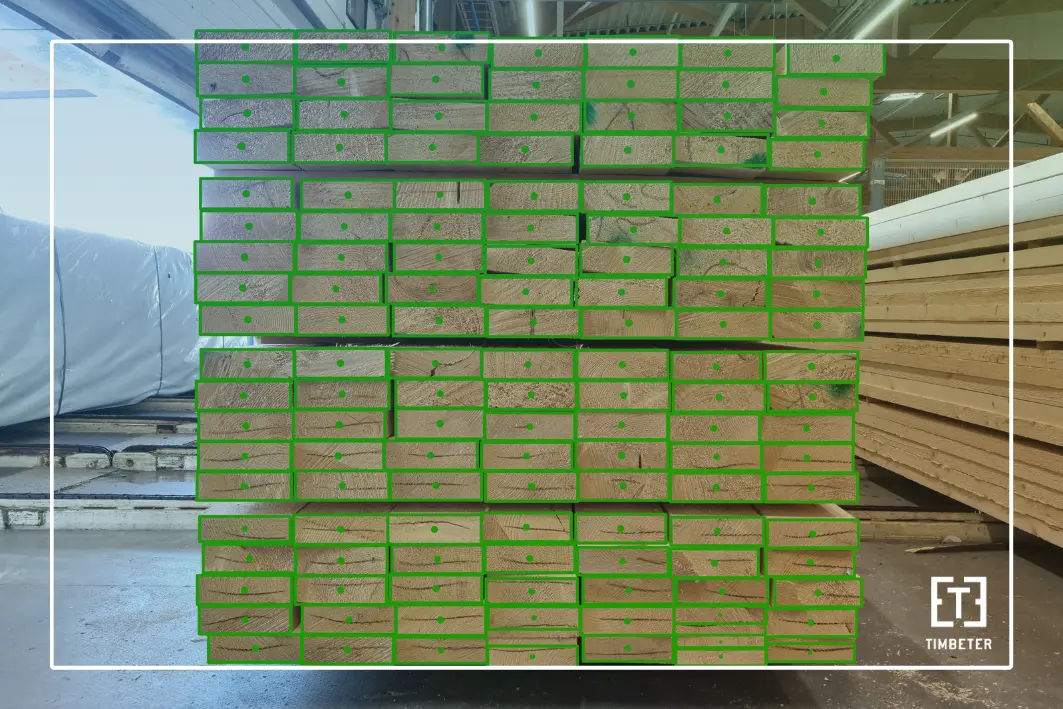
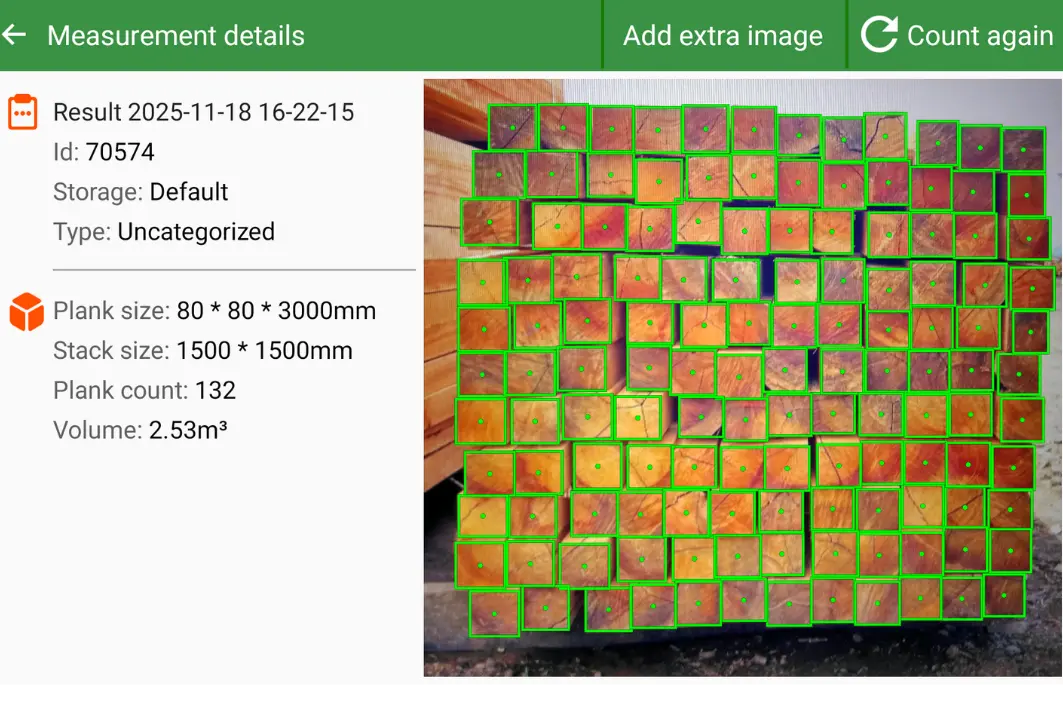
Timbeter Lumber is a mobile application that counts lumber planks from a standard smartphone photo. Using AI and machine learning, it detects planks of varying sizes, wood types, surface textures, and colours — handling stacks of hundreds of planks in a single image.
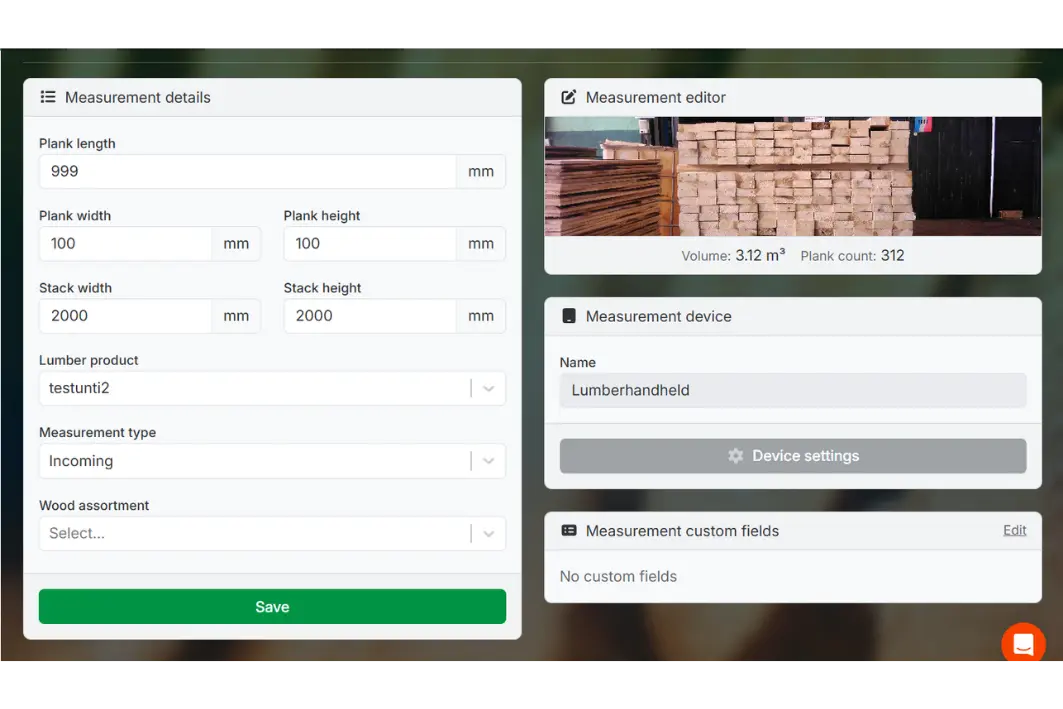
The workflow is straightforward: photograph the lumber bundle, get an instant count, and have that data saved to the cloud with a linked image. No manual entry. No transcription errors. No delay between production and reporting.
Volume calculation is built in. The software incorporates plank dimensions to deliver accurate volumetric measurements — not approximations. For sawmills managing multiple assortments or supplying buyers who specify volume, this precision matters directly to the bottom line.
Imperial and metric units are both supported. Following user feedback from operations across different markets, Timbeter Lumber integrates both systems, removing the unit-conversion friction that often creeps into cross-border timber trade.
Each bundle gets a unique ID. This enables label printing and physical tracking through the yard, which eliminates double-counting at despatch and keeps inventory data clean across shifts.
What this looks like at an operating sawmill
Busoga Forestry Company (BFC), a subsidiary of Green Resources operating in Uganda, is one of the clearer examples of what this shift delivers in practice. Before adopting Timbeter Lumber, BFC tracked timber production using written tally sheets. As Graham Keth, Sawmill Industry Manager at BFC, described: the core problem wasn’t the counting itself — it was the delay between timber being produced and that information reaching the production report.
That delay compressed the window for decision-making. Overruns happened. Discrepancies emerged. And when they did, there was no way to go back and verify what had actually been recorded.
After integrating Timbeter Lumber, BFC moved to a real-time reporting environment. Production figures are visible at any point in the day. When a discrepancy surfaces, the photograph attached to each measurement provides an immediate reference — no guesswork, no conflicting accounts. Unique bundle IDs are printed onto labels and attached to physical stacks, so inventory moves through the yard with a traceable identity.
The result, in Graham’s words: “It has improved the accuracy of our reporting by eliminating the recapture of manually recorded information, where most errors were being made.”
BFC’s experience was positive enough that the company is now rolling out Timbeter Lumber across other operations within the Green Resources group.
From inventory chaos to operational clarity
The broader value of digital lumber measurement isn’t just accuracy — it’s the quality of decisions that accuracy enables. When production data is real-time, managers can catch overruns before they compound. Inventory figures can be trusted when planning dispatch schedules. Buyer-facing documentation reflects what’s actually in the yard, not what was counted three hours ago.
The latest enhancements to Timbeter Lumber extend this further with a dedicated dashboard that visualises volumes through interactive charts, customisable by operation and time period. For operations managing multiple product lines or reporting to a parent company, this kind of consolidated visibility replaces the patchwork of spreadsheets that tends to accumulate around manual processes.
There’s a sustainability dimension here too, though it’s largely operational in nature. Fewer errors mean fewer correction cycles. Better inventory visibility means tighter production planning and less unnecessary handling. When timber moves through the yard on accurate data, the whole chain — from saw to dispatch — runs leaner.
The case for making the switch
The tally sheet is a workaround, not a system. It functions well enough at low volume but degrades precisely when operations scale — which is when accurate data matters most. For sawmills, wood exporters, and forestry companies managing processed lumber inventory, the cost of manual counting isn’t just the time spent counting. It’s the downstream cost of every decision made on inaccurate numbers.
AI-based lumber measurement doesn’t require a hardware overhaul or a long implementation. It requires just a smartphone and that’s it.
See what real-time plank counting looks like for your operation.
Timbeter Lumber replaces manual tally sheets with instant AI-powered counts, cloud-saved records, and unique bundle IDs — so your production data is accurate from the moment timber leaves the saw. Book a free demo and see it in action with your own lumber stacks.
Book a free demo