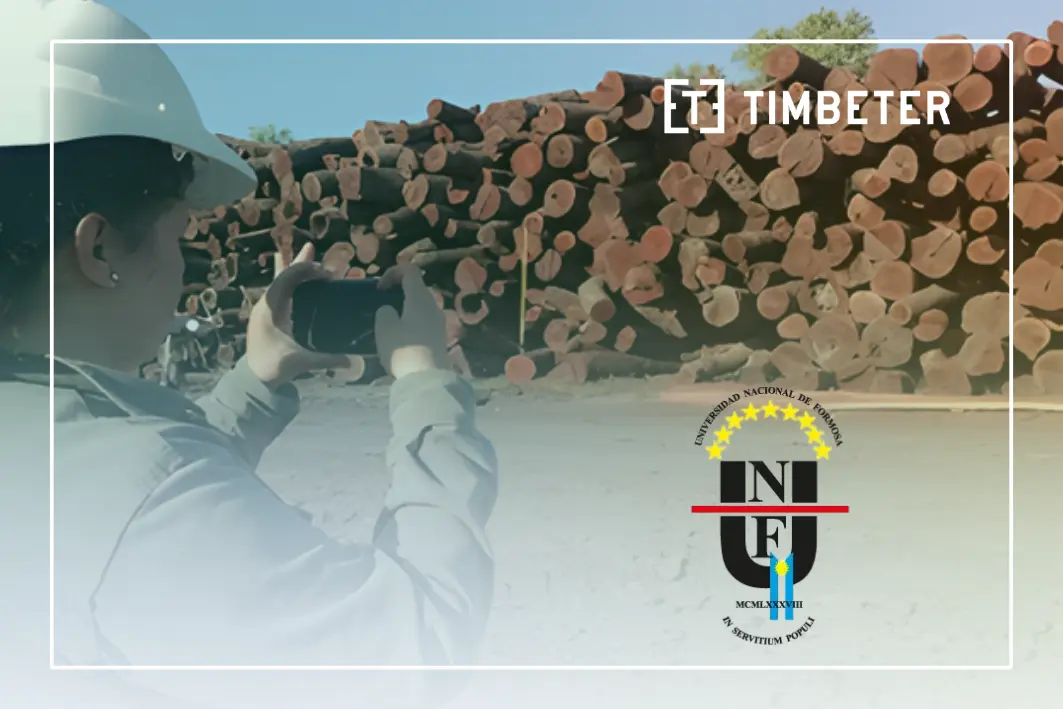
What happens when future forestry engineers meet artificial intelligence in the middle of a log yard? At the Universidad Nacional de Formosa (UNaF) in Argentina, the answer was a hands-on academic project that brought Timbeter into real field conditions for the first time in their forestry program. The goal was clear: evaluate how well an AI-powered measurement tool performs on native species—specifically quebracho colorado (Schinopsis balansae)—and compare it to traditional methods.
Why Timbeter?
The research team at UNaF wanted to test the viability of using Timbeter for timber data collection on native hardwood piles, while also building digital measurement skills among senior forestry students. There was a bigger picture too: if the tool proved reliable academically, it could be adopted by local forestry companies as a faster, more precise alternative to manual measurement.
The challenge before AI
Measuring quebracho colorado isn’t simple. Logs were stacked in irregular piles or loaded on trucks with varying lengths and imperfect alignment. Traditional measurement meant time-consuming manual work, handwritten notes, and later transcription into spreadsheets. The process was slow, labor-intensive, and naturally exposed to human error. Everyone involved saw the need to increase productivity and improve precision without sacrificing trust in the results.
Implementation as a real learning project
Timbeter was introduced through a structured academic work plan led by a professor and executed by a student team. One student took ownership of designing the full methodology: coordinating with industry partners, reviewing existing research, setting up statistical analysis, and training peers on both the Timbeter app and dashboard.
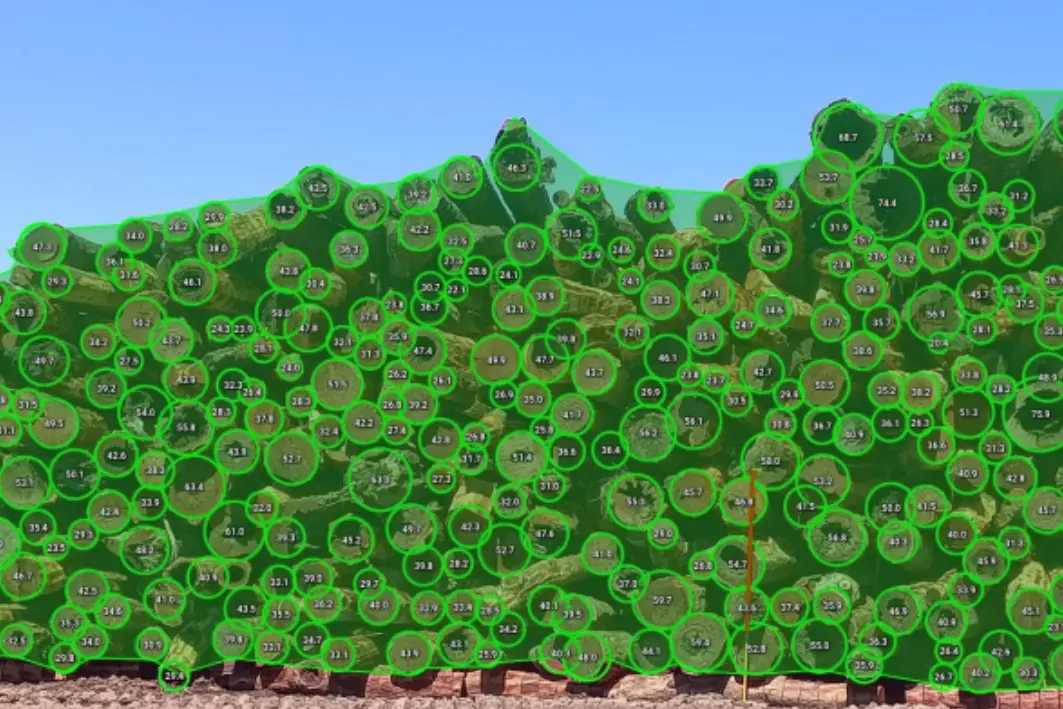
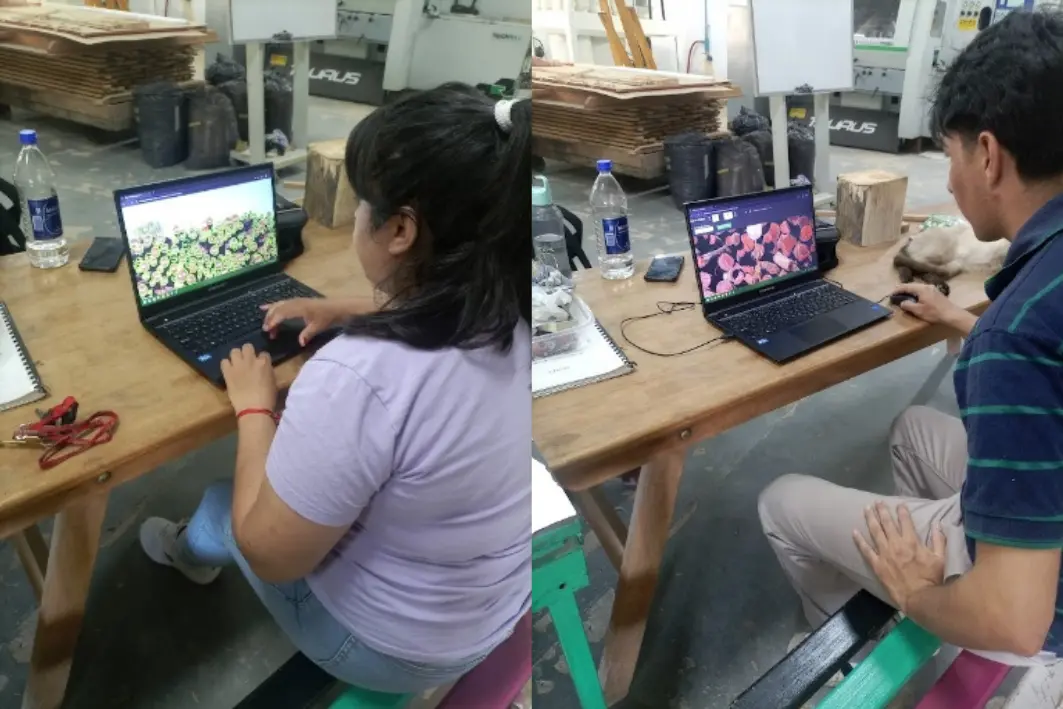
Field data collection took place at UNITAN and INDUNOR—two major tannin companies in Argentina—under the supervision of faculty and company forestry engineers. Multiple student groups were involved: some captured images in the field, others processed outputs in the online dashboard, and another group trained additional classmates. In short, it became a true ecosystem project, spreading digital capability across the program.
Learning curve and user experience
Because AI measurement tools aren’t commonly used in the local forestry sector, the shift required some adaptation. At the start, students had plenty of questions, but once access to the platform was granted, learning accelerated. Students already understood log scaling principles, and Timbeter fit naturally with that knowledge, translating what they knew into a digital workflow.
Feedback from both students and colleagues was strongly positive. They highlighted the tool’s innovation, ease of use, and potential for modernizing field practices. Importantly, this was the first time such a cloud-based, sync-enabled application had been used in the program. Earlier academic work relied on desktop software without real-time collaboration or on-site connectivity.
What improved in practice
With Timbeter, students could capture diameters across an entire pile almost immediately. The dashboard enabled verification and corrections where needed, supporting data accuracy. And instead of rewriting paper sheets into spreadsheets later, Timbeter generated a clean digital database automatically, exportable to PDF and Excel—saving significant time and reducing error risk.
Looking ahead
UNaF would recommend Timbeter to other universities and research institutions for its practicality, strong data outputs, and analytical potential. They also suggested enhancements tailored to academic use—such as more flexible editing, easier renaming of results, bulk exports, and a detailed user manual to support first-time learners.
For Timbeter, this project is a great reminder of what happens when technology meets curiosity: students learn faster, research becomes more scalable, and the forestry sector gains a clear path toward smarter, more digital measurement in native forests.
See how AI log measurement works in real field conditions.
Just like the UNaF project showed, Timbeter helps teams measure faster, reduce manual errors, and keep results transparent and verifiable.
Book a free demo