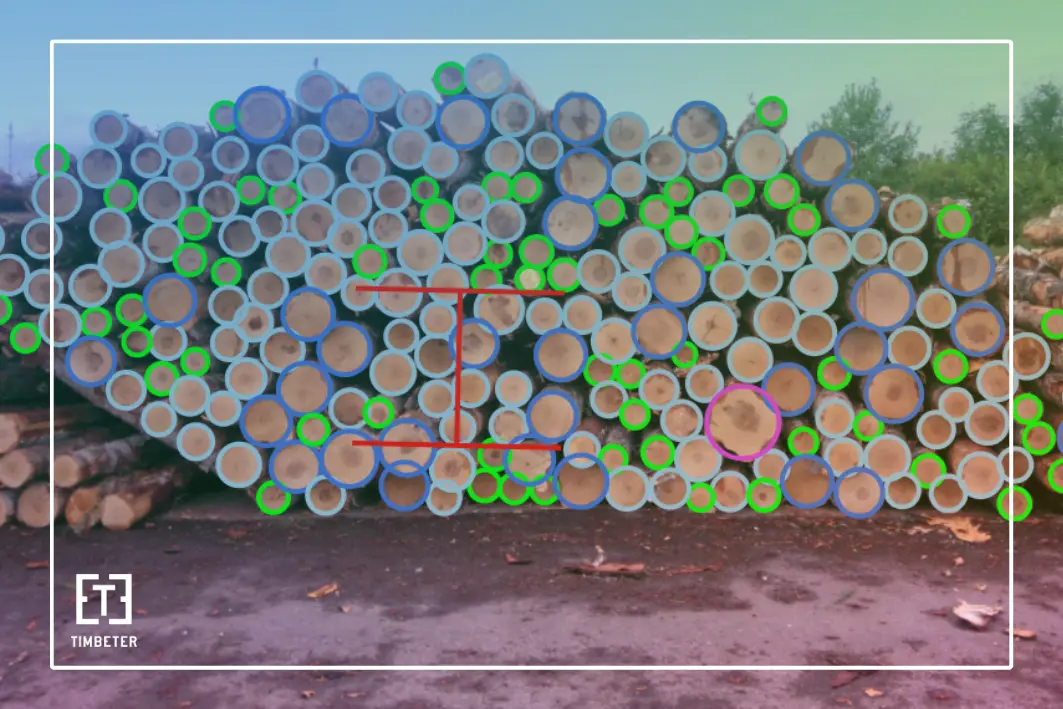
A truck arrives at the yard carrying a mixed load: sawlogs, pulpwood-grade material, and a handful of oversized logs that belong in a completely different product category. Someone has to sort that pile before it can be priced, allocated, or shipped — and in most operations, that sorting still happens by eye, with a tape measure and a mental threshold for “big enough” or “too small.” One person’s 24 cm cutoff is another person’s 26 cm cutoff, and the assortment split shifts depending on who’s standing at the pile that day.
This isn’t a minor inconvenience. Diameter thresholds determine which logs go to the sawmill, which go to pulp, and which get rejected or downgraded — and each category carries a different price. When the sorting rule lives in someone’s head instead of in the measurement process, two operators can look at the same pile and produce two different assortment breakdowns. Over a season, that inconsistency adds up to real revenue sitting in the wrong category.
The gap is that measurement and grading happen as two separate steps
Most digital measurement tools tell you the volume of a pile. Far fewer tell you how that volume is distributed across the diameter classes that actually determine product value. Without that breakdown built into the measurement itself, grading becomes a manual second pass — someone re-checking logs against a threshold, or worse, applying that threshold from memory at the point of sale.
Diameter profiles close that gap at the moment of measurement
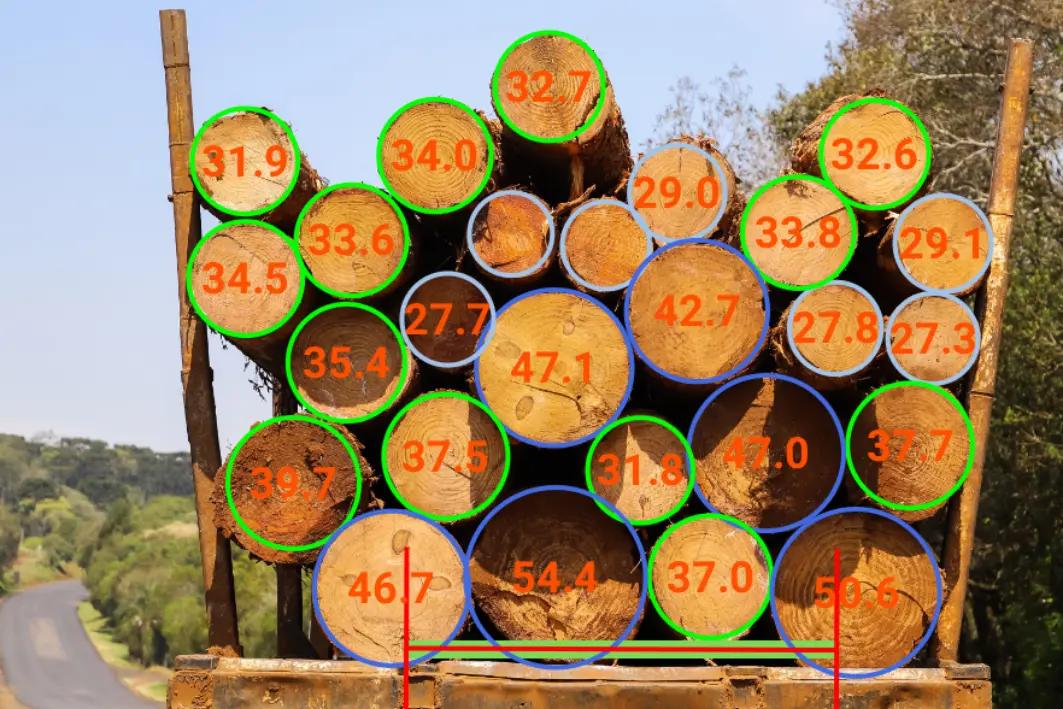
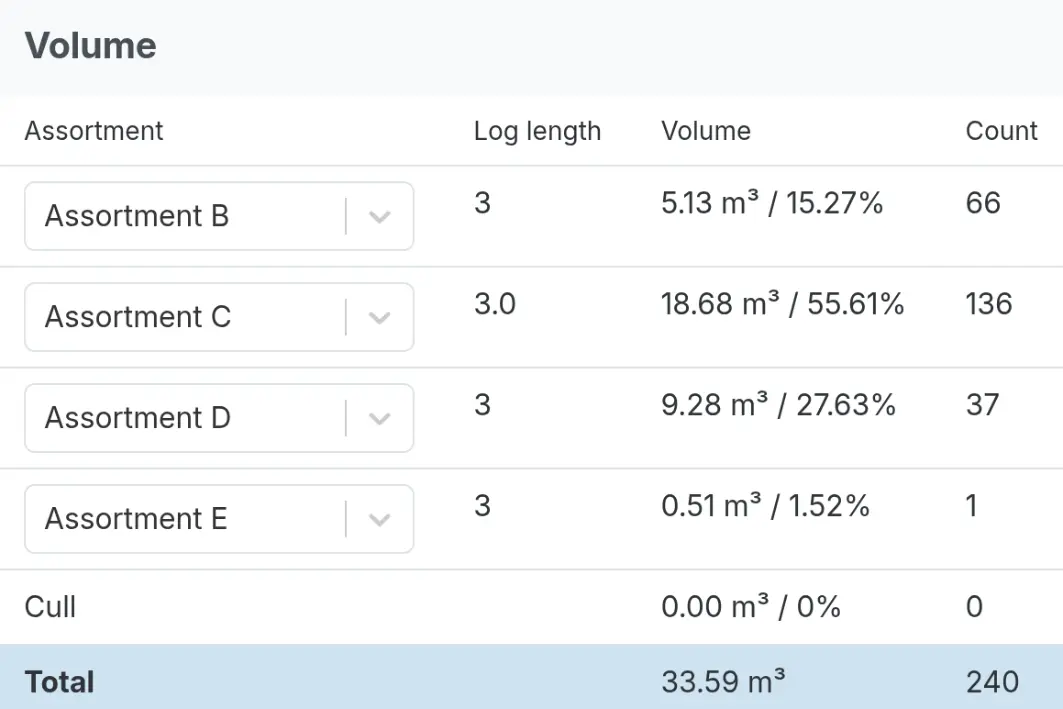
Timbeter’s diameter profiles let an operation define its own diameter bands — say, under 14 cm for pulpwood, 14–24 cm for standard sawlogs, and above 24 cm for premium grade — and apply them automatically as part of the same photo-based measurement. Instead of a single volume figure, the operator gets a full breakdown: how many logs and how many cubic meters fall into each band, generated the moment the photo is taken. There’s no separate sorting pass and no dependence on whoever happens to be on shift that day.
Paired with Timbeter’s custom fields, an operator can tag the same measurement with species, origin, or intended product line, so a single photo produces both the diameter split and the metadata a buyer or mill needs to route the material correctly. Irani, one of Brazil’s leading paperboard and packaging producers, saw this play out directly in its own operations: diameter-based scanning of each pile improved product separation enough that mixed loads could be properly split by category rather than processed as a single undifferentiated batch, directly supporting better logistics planning.
For a pallet producer separating structural-grade lumber from repair stock, or a pulp mill distinguishing pulpwood from sawlog-quality material, this changes what the measurement data is used for. It stops being a volume total handed to accounting and becomes an assortment report handed to sales, procurement, and logistics — the same day the truck is unloaded.
Consistent grading is a traceability issue, not just an efficiency one
As buyers, certification bodies, and regulators ask for more granular data on what was harvested and how it was classified, the diameter distribution of a delivery becomes part of the traceability record, not just an internal grading exercise. A pile that’s been sorted by a documented, repeatable rule — rather than an operator’s judgment on the day — is easier to defend in an audit, easier to reconcile against a buyer’s specification, and easier to price fairly on both sides of the transaction. That consistency also matters internally: when every yard and every shift applies the same diameter bands, headquarters gets assortment data it can actually compare across sites.
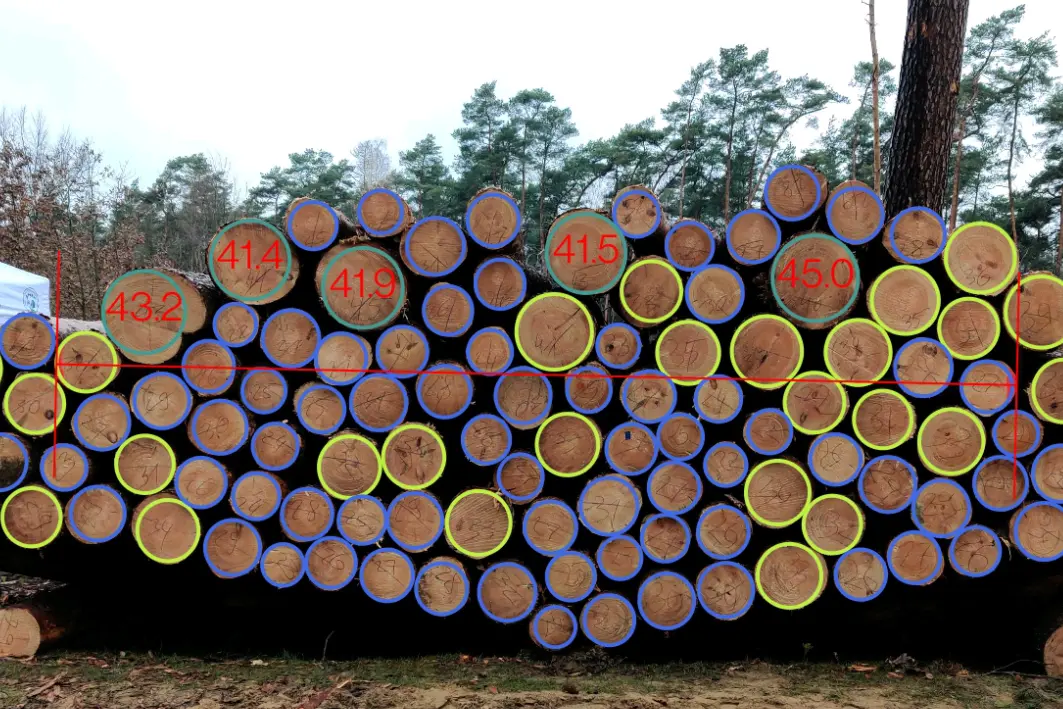
Grading rules that live in a spreadsheet or a supervisor’s memory will always drift. Building them into the measurement process is what keeps assortment data consistent, auditable, and immediately usable. If your operation is still separating assortments after the fact, it’s worth seeing what changes when the grading happens at the same moment as the measurement.
One photo, one complete assortment breakdown.
Timbeter's diameter profiles apply your own grading rules automatically at the point of measurement, so every pile is sorted the same way, every time.
Book a free demo